My Roof Has A Small Leak In It- Can I Just Fix It?
What should you do for a small roof leak?
My Roof Has A Small Leak In It- Can I Just Fix It?
Post Published August 16, 2026.
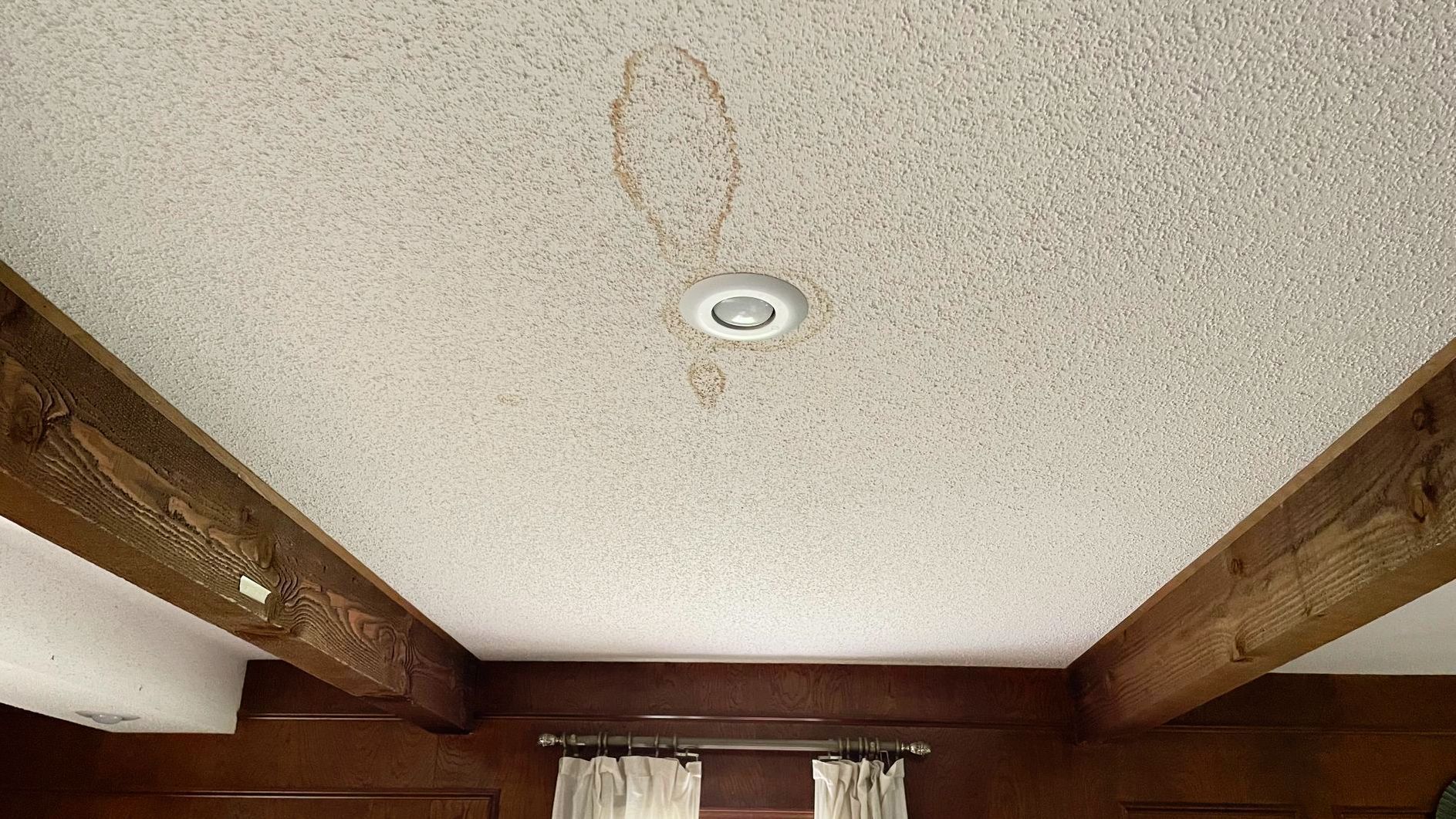
You notice a brown spot on the ceiling.
Or maybe during one of those heavy Kansas City thunderstorms, you find a small drip coming from somewhere upstairs, and your mind immediately goes to the expensive place:
“Oh no. Does this mean I need a whole new roof?”
Usually, no.
A roof leak does not automatically mean you need a roof replacement. In fact, plenty of leaks can be fixed with a relatively straightforward repair- but here's where things get tricky: the size of the water stain inside your house doesn't necessarily tell you the size of the roofing problem outside.
A tiny ceiling stain can come from a simple flashing issue. It can also be the first visible sign of water that's been seeping beneath your shingles for quite a while. It could also have nothing to do with your roof leaking and instead be related to poor attic ventilation or a plumbing problem.
So instead of starting with “How much is a new roof?”, let's start with the better question:
Where is the water actually coming from?
If the leak is small, isn't the problem probably small too?
We wish it worked that way.
Water is surprisingly good at traveling.
It can enter your roof in one location, follow decking or a rafter, and finally drip onto your ceiling several feet away. That's why the wet spot you see inside your house isn't always directly underneath the problem.
Common sources of roof leaks include:
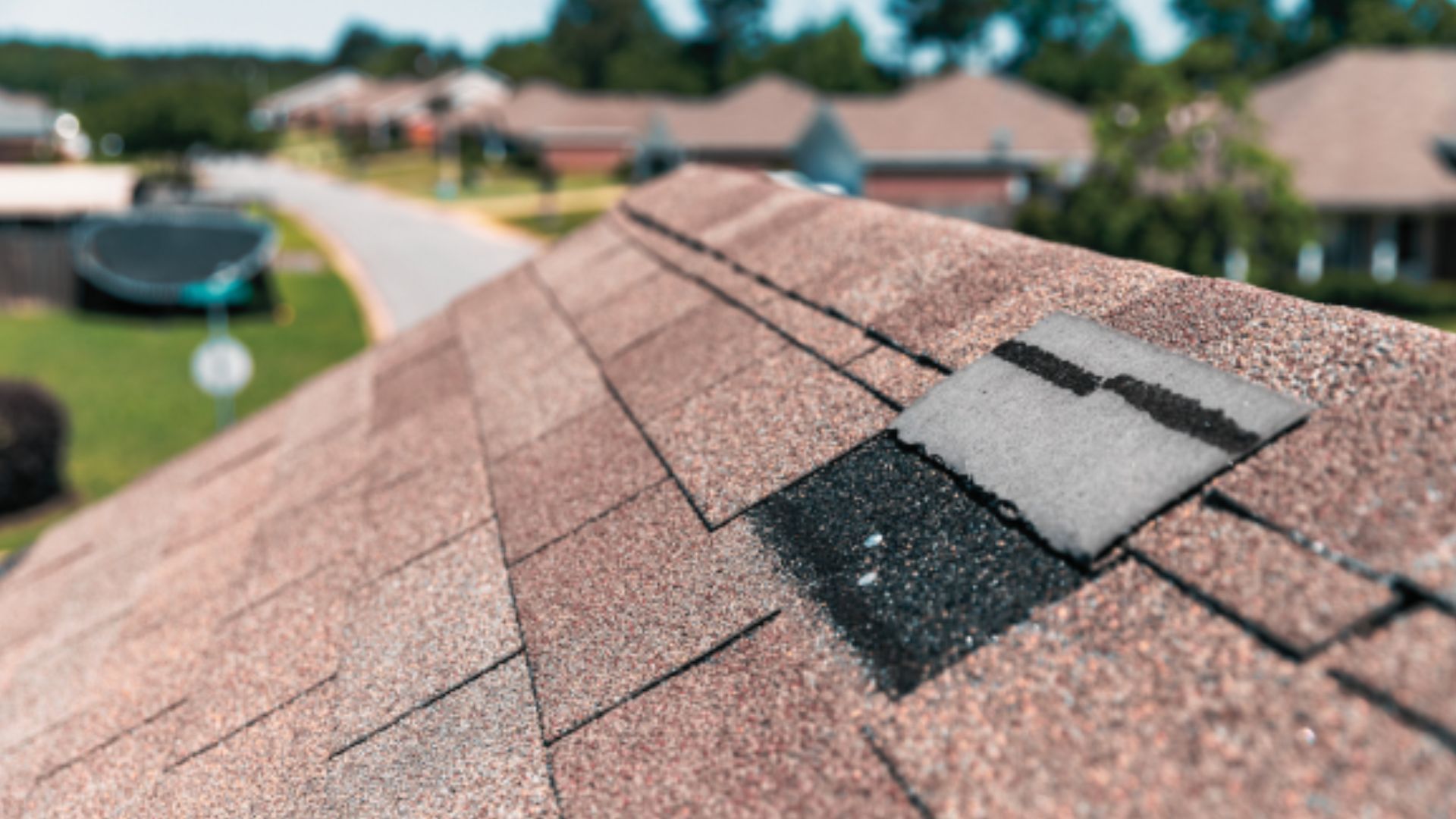
- Damaged or missing shingles
- Pipe boots
- Chimney flashing
- Roof vents
- Valleys
- Skylights
- Exposed or backed-out fasteners
- Wind-damaged shingles
- Improperly installed flashing
Some of these can be relatively simple repairs.
Others can point to a larger roofing issue. If you see water spots on your ceiling, it's time to do a little detective work.
Can I just patch the spot that's leaking?
Sometimes- and that's exactly what we'll recommend if we can do it without compromising the roof- and as long as it's a good long-term solution.
If the roof is otherwise healthy and the source of the leak is isolated, repairing it can absolutely be the right answer.
Let's say a pipe boot has failed on an otherwise good roof. You probably don't need 3,000 square feet of new shingles because of one pipe boot.
The same can be true for isolated wind damage or a small flashing problem. However, a patch becomes less attractive when you're dealing with an older roof that has problems in several places. It may be noticeable, and there could be challenges in matching the color of sun-worn shingles.
At that point, you have to ask a different question:
Am I fixing the problem, or am I buying myself a few more months until the next problem?
How do I know whether repairing my roof is worth it?
We generally want to look at the roof as a complete system. You can expect a roofer to consider the following:
How old is it?
What condition are the shingles in?
Is this the first repair or the fifth?
Is the problem isolated?
Has the roof experienced hail or significant wind damage?
Can replacement shingles reasonably match and integrate with what's already there?
A repair makes much more sense on a healthy 8-year-old roof than it might on a 25-year-old roof showing deterioration in multiple areas, which is why age alone shouldn't determine the answer. If your roof has damage, it could be covered under an insurance claim.
Condition + cause + extent of damage are much more useful.
How much does a roof repair cost in Kansas City?
This is understandably one of the first things homeowners want to know.
Unfortunately, “roof repair” can describe everything from replacing a small piece of flashing to rebuilding a damaged section of roofing and decking.
A smaller roof repair may cost hundreds of dollars, while a complicated repair involving flashing, decking, multiple penetrations, or a larger damaged area can run into the thousands.
Accessibility matters too. A steep, three-story roof with complicated valleys is a very different repair from an easily accessible ranch home.
As a side note: We highly recommend that homeowners be cautious about anyone quoting an exact repair price without actually seeing the roof or getting on it. After big storms, you may see an influx of roofers walking door-to-door- if one ever comes to your door and tells you to file a claim after a storm, don't!
The better question during a roof repair estimate is:
“If I spend this money repairing it, how confident are you that this solves my problem?”
That's the answer that tells you whether you're getting good value.
What happens if I just put a bucket under it and wait?
Here's where a relatively inexpensive problem can become an expensive one.
A roof leak isn't only about the shingles.
Water can eventually affect:
- Roof decking
- Rafters
- Insulation
- Drywall
- Paint
- Electrical components
- Interior finishes
Persistent moisture can also create conditions for mold and wood deterioration.
Plus, there's another problem homeowners don't always consider: The leak you see may not happen every time it rains.
Wind direction matters: a certain combination of heavy rain and wind may push water into a vulnerable area, whereas the next three rainstorms don't.
That can make it tempting to assume the problem fixed itself or that it was a fluke. Roofs don't generally heal themselves, and if water got in once, it's worth figuring out why. Most roof inspections are complimentary. Besides giving up some time, having a professional get in your attic to take a look shouldn't cost you anything.
Does a roof leak mean I should file an insurance claim?
Not automatically.
Insurance generally isn't intended to pay for ordinary maintenance, aging materials, or deterioration.
If a covered storm event caused the damage, for example, wind damaged shingles and created the opening that allowed water inside, insurance coverage may be a consideration depending on your policy. But if an old pipe boot simply deteriorated over time, that's a very different situation.
That's why we like to inspect first, understand second, and decide third.
Don't assume you need a claim.
Don't assume you don't.
First, figure out what happened and work with a professional to decide on what's right for your unique situation.
What if the leak started right after a Kansas City storm?
That timing matters.
If you didn't have a leak before a significant hail damage or wind event and suddenly have one afterward, tell your roofing contractor.
That doesn't prove the storm caused it, but it gives the inspector important context.
They can look for related signs such as missing or creased shingles, hail impacts, damaged vents, flashing problems, or debris impacts.
This is also why documenting when you first noticed the leak is useful.
Take pictures, write down the date, and, if you can safely, take a picture of the interior damage before cleaning anything up.
Should I climb into the attic?
If you can safely access it, looking from inside the attic can sometimes provide helpful clues, but don't get up there if you're uncomfortable, have medical issues, or are susceptible to high temperatures. Attics are not the nicest places, and we would hate for someone to get up there and not be okay.
If you do go up in your attic, you may see:
- Wet decking
- Water staining
- Damp insulation
- Darkened wood
- Daylight coming through an opening
But again, don't put yourself in danger trying to diagnose the problem.
Wet insulation, exposed nails, electrical wiring, and difficult attic access can create hazards, and we definitely don't recommend climbing onto a wet roof to hunt for the leak yourself.
How quickly should I call someone?
If water is actively entering your home, we'd treat it as a situation that needs attention quickly. We can tarp your roof to stop the leak until a full roof inspection can be made.
If you've discovered an old stain that's completely dry, you have a little more breathing room, but we'd still want to understand what caused it. Remember, “not currently leaking” and “fixed” are two very different things.
Kansas City weather isn't particularly forgiving. Between summer thunderstorms, hail, high winds, winter freezes, and temperature swings, small vulnerabilities tend to get tested again.
How do I know if a roofer is recommending a replacement I don't actually need?
Ask them to show you.
This is one of the simplest ways to evaluate a roofing contractor.
If someone says your roof needs replacement, ask:
Where is the problem?
Can you show me pictures?
Why can't this area be repaired?
What happens if I repair instead?
How much useful life do you think the rest of the roof has?
A good roofing contractor shouldn't be irritated by those questions; they should welcome them. You should feel well educated about your home's exterior and situation when they're done going over their inspection findings.
You should understand exactly what you're buying and why. Be cautious when the conversation immediately jumps from one ceiling stain to a complete roof replacement without explaining the steps in between.
Should I get more than one estimate?
For a significant repair or replacement, getting another opinion can be smart, especially if the recommendations are dramatically different.
But don't compare price alone.
Imagine Contractor A recommends a $900 repair and Contractor B recommends a $1,600 repair.
Contractor B isn't necessarily expensive. Maybe they're addressing damaged decking and flashing that Contractor A didn't include.
Ask each roofing contractor to explain:
- What caused the leak
- What they're repairing
- What materials they'll use
- Whether surrounding materials are still serviceable
- What warranty applies
- What they expect the repair to accomplish
- If the price would be more than what they quoted for any reason
Now you're comparing solutions instead of numbers.
So…do I need a repair or a new roof?
Maybe the answer is a $500-ish roof repair.
Maybe there's significant damage and full roof replacement makes more sense.
Maybe your roof is perfectly healthy, and one small component failed.
You shouldn't know the answer before someone actually looks at it, and neither should the roofing contractor.
At Ranger Roofing & Exteriors, our job is to figure out what's happening first. Then we can talk about the options that make sense for your roof, your home, and your budget.
Finding a water stain on the ceiling is stressful enough; you shouldn't also have to wonder whether someone is trying to sell you more roof than you actually need. Learn more about our full range of home exterior siding and roofing services in Parkville, MO and the entire Kansas City Metro.
Can a small roof leak be repaired without replacing the entire roof?
Yes. Many leaks are caused by isolated issues such as damaged shingles, pipe boots, vents or flashing and can be repaired without replacing the entire roofing system. The condition and age of the surrounding roof help determine whether a repair makes sense.
How much does it cost to repair a leaking roof in Kansas City?
Roof repair costs vary considerably depending on the source of the leak, accessibility, materials, and whether decking or other components are damaged. Small repairs may cost hundreds of dollars, while more complicated repairs can reach into the thousands. An on-site inspection is the best way to get an accurate estimate.
Is a leaking roof an emergency?
Active water intrusion deserves prompt attention because water can damage decking, insulation, drywall and other parts of the home. If water is entering near electrical fixtures or creating a safety concern, take appropriate precautions and seek professional help immediately.
Will homeowners insurance pay to repair my leaking roof?
It depends on what caused the leak and the terms of your policy. Damage from a covered storm event may be treated differently from normal aging, deterioration or maintenance issues. Determining the cause of the leak is an important first step.
Why does my roof only leak during really heavy rain?
Some leaks only appear when rain is accompanied by strong winds or when water reaches a vulnerable flashing, valley, or roof penetration in a particular way. An intermittent leak still indicates that water is entering somewhere and is worth investigating.
FAQs
This is the text area for this paragraph. To change it, simply click and start typing.
Is it safe to stay home during a roof replacement?
Yes. Most homeowners safely remain in their homes during roof replacement, although the noise and vibrations can be disruptive.
How long does a roof replacement usually take?
Most asphalt shingle roof replacements in the Kansas City area are completed in one to two days, depending on the size and complexity of the roof.
Will my homeowner's insurance pay for a hotel during roof replacement?
Typically, no. If the roof replacement is part of a covered insurance claim and the home becomes temporarily uninhabitable, coverage may vary by policy. Check with your insurance provider for details.
Should I warn my neighbors before my roof is replaced?
It's a thoughtful gesture. Letting neighbors know about the project can help them prepare for temporary noise and additional vehicles in the area.
What happens if bad weather delays my roof replacement?
Professional roofing contractors closely monitor weather conditions and use protective materials to keep your home dry if unexpected rain interrupts the project.
5-Star Customer Experience